
What Is Voltage, Current, Resistance, and Power? A Complete Guide to Ohm's Law and Electricity Basics
Electricity is something we use every single day — when we charge our phone, switch on a fan, or power a laptop — but very few people truly understand what is happening behind the switch. If you are a beginner in electronics, an engineering student, or simply curious about electrical concepts, understanding voltage, current, resistance, power, and Ohm's Law is the first and most important step. In this detailed guide, we will walk step-by-step through electricity basics, electrical charge, the relationship between V, I, R, and P, and the fundamental principle of Ohm's Law in a clear and meaningful flow.
Electricity Basics — Where Everything Begins
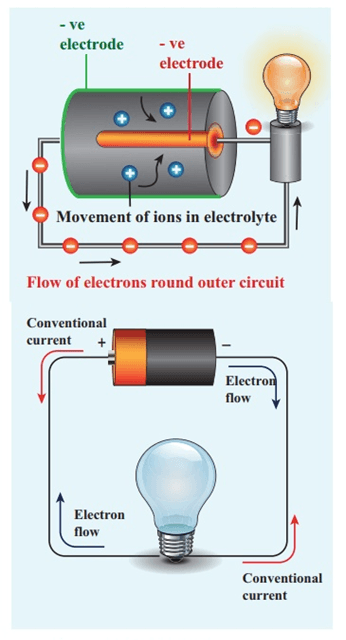
Before we talk about voltage or current, we must first understand electricity basics. Electricity is the flow of tiny charged particles called electrons. These electrons move through a material — usually a metal wire — when a source like a battery pushes them.
Think of electricity like water flowing through a pipe. The water represents electric charge, the pipe represents the wire, and the pump represents the battery. This simple analogy helps beginners understand complex electrical principles easily.
What Is Electrical Charge?
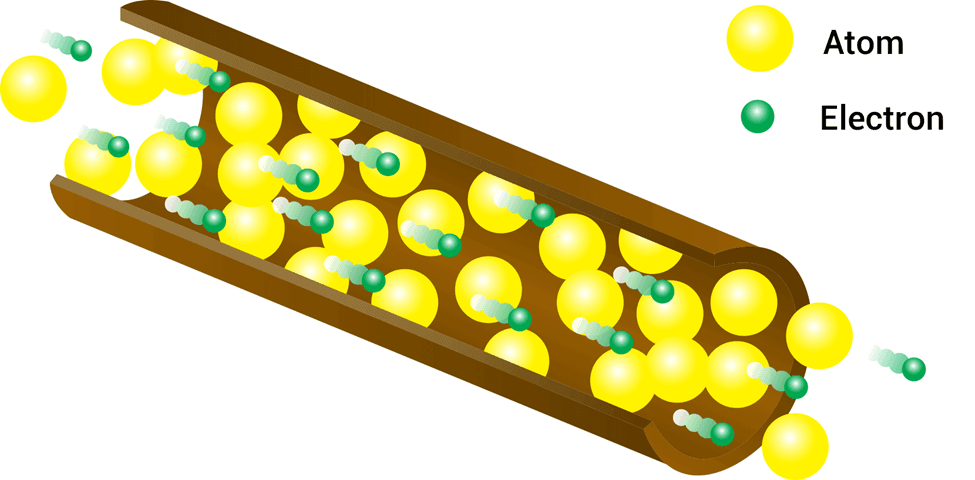
Electrical charge is the basic property of matter that causes electrical effects. There are two types of charges: positive and negative. In electrical circuits, we mostly deal with negative charge (electrons) moving through conductors.
Charge is measured in Coulombs (C). One Coulomb represents a large number of electrons. When these electrons move, they create electric current.
Understanding electrical charge is important because voltage and current exist only because of charge movement.
What Is Voltage? (Electric Potential Difference)
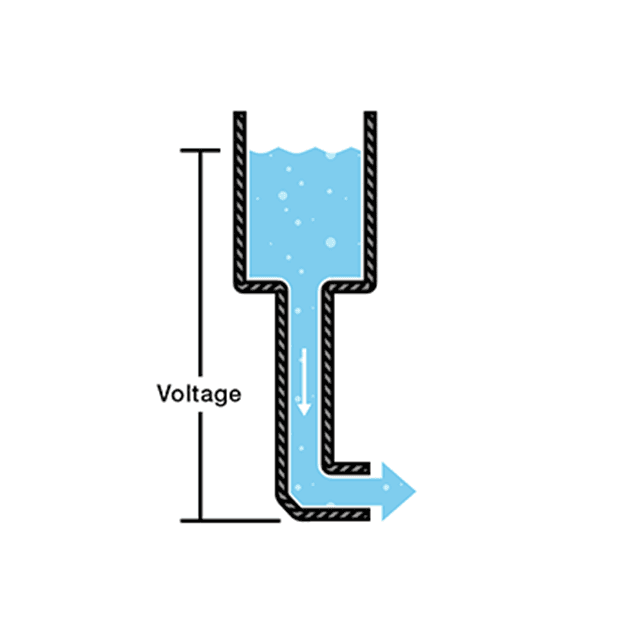
Voltage is the driving force that pushes electric charge through a circuit. It is also called electric potential difference and is measured in Volts (V).
A simple way to understand voltage is to think of it as water pressure in a pipe. Higher pressure means stronger flow. Similarly, higher voltage means a stronger push on electrons.
- 1A small battery might provide 1.5V
- 2A phone charger may provide 5V
- 3Household supply can be 220V or 110V depending on the country
What Is Current? (Flow of Charge)
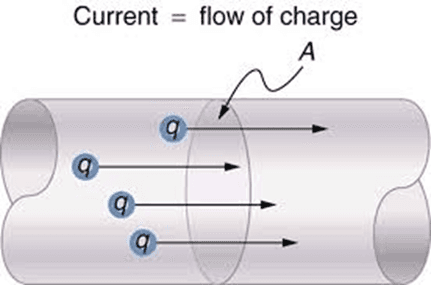
Current is the rate at which electric charge flows through a conductor. It is measured in Amperes (A).
If voltage is the pressure, then current is the actual flow of water. When more electrons pass through a wire per second, the current increases.
Current = Charge / Time
If too much current flows, wires can heat up and components may get damaged. That is why understanding current is very important in electronics projects.
What Is Resistance? (Opposition to Flow)
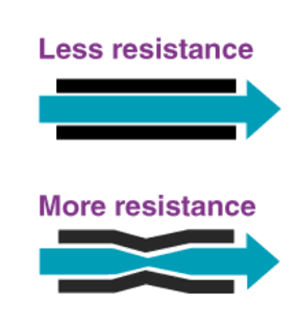
Resistance is the opposition to the flow of electric current. It is measured in Ohms (Ω).
In our water analogy, resistance is like a narrow pipe. The narrower the pipe, the harder it is for water to flow. Similarly, higher resistance reduces current.
- 1Copper has low resistance (good conductor)
- 2Rubber has very high resistance (insulator)
Resistors are commonly used in circuits to control current and protect components.
What Is Power in Electricity?
Electrical power is the rate at which electrical energy is used or converted. It is measured in Watts (W).
Power tells us how much work electricity is doing. For example:
- 1A 5W LED bulb uses less power
- 2A 100W bulb consumes more energy
Power (P) = Voltage (V) × Current (I)
What Is Ohm's Law?
Ohm's Law is a fundamental electrical principle that explains the relationship between voltage (V), current (I), and resistance (R) in an electric circuit. It was discovered by the German physicist Georg Simon Ohm in 1827.
Ohm's Law states that the current flowing through a conductor is directly proportional to the voltage applied across it and inversely proportional to its resistance, provided the temperature remains constant.

Mathematical Formula of Ohm's Law
The formula is: V = I × R
- 1V = Voltage (Volts)
- 2I = Current (Amperes)
- 3R = Resistance (Ohms)
Ohm's Law Relationship — All Three Formulas
By knowing any two values of Voltage, Current or Resistance, we can use Ohm's Law to find the third missing value.
Ohm's Law Triangle
It is sometimes easier to remember the Ohm's Law relationship by using pictures. The three quantities V, I and R have been superimposed into a triangle — called the Ohm's Law Triangle — giving voltage at the top with current and resistance below.

What Is Power in a Circuit?
Electrical Power (P) in a circuit is the rate at which electrical energy is absorbed or produced within a circuit. A source of energy such as a voltage will produce or deliver power while the connected load absorbs it.
The Power Triangle
The three quantities P, V, and I have been superimposed into a triangle called the Power Triangle with power at the top and current and voltage at the bottom.

Electrical Power Rating
Electrical components are given a power rating in watts that indicates the maximum rate at which the component converts electrical power into other forms of energy such as heat, light or motion. For example, a 1/4W resistor, a 100W light bulb, etc.
Some electrical devices like motors have a power rating in Horsepower (hp). The relationship is: 1hp = 746W. So a two-horsepower motor = 1492W or 1.5kW.
Ohm's Law Pie Chart
The Ohm's Law Pie Chart combines all formulas for V, I, R, and P in one easy-to-read visual reference.

Ohm's Law Matrix Table
The Ohm's Law Matrix Table provides a quick reference for calculating any unknown value when the other two are known.

Ohm's Law Example
For a given circuit, use Ohm's Law to find the Voltage (V), the Current (I), the Resistance (R) and the Power (P). Power within an electrical circuit is only present when BOTH voltage and current are present.
In an open-circuit condition, voltage is present but current I = 0, so power = 0. In a short-circuit condition, current is present but voltage V = 0, so power is also 0.
Why Understanding These Basics Is Important
If you are working on electronics projects like power supplies, Arduino circuits, battery chargers, or motor drivers, these concepts are not optional — they are essential. A weak understanding of voltage, current, resistance, and power often leads to burnt components or unstable circuits.
When your fundamentals are strong, designing circuits becomes logical rather than confusing.
Conclusion
Voltage pushes the charge. Current is the flow of charge. Resistance controls the flow. Power measures the work done. Ohm's Law connects them all.
Once you truly understand the relationship between V, I, R, and P, electricity stops feeling mysterious and starts feeling predictable. Whether you are a beginner learning electricity basics or an engineering student strengthening your foundation, mastering these core concepts will build confidence in every electronics project you create.
Key Takeaways
- 1⚡ Voltage (V) is the driving force that pushes electric charge through a circuit — measured in Volts
- 2🌊 Current (I) is the rate of flow of electric charge — measured in Amperes
- 3🔧 Resistance (R) opposes the flow of current — measured in Ohms
- 4💡 Power (P) is the rate of energy conversion — measured in Watts
- 5📐 Ohm's Law (V = I × R) connects voltage, current, and resistance
- 6🔋 Power Formula (P = V × I) shows how both voltage and current affect power
- 7🚀 These fundamentals are essential for every electronics and engineering project