
What Is a Navigation System? GNSS vs GPS Explained (Complete Guide with History, Principles, Applications & More)
If you open Google Maps today, track a drone flight, monitor a cargo ship, or check your food delivery location, you are using a navigation system. But what exactly is a navigation system? And how are GNSS and GPS related to it?
Many people think GPS and GNSS are the same — but they are not. In this complete guide, we will explain everything in simple language: definition, classification, history, principles, types, augmentation systems, comparison, related technologies, international regulations, and alternatives.
What Is a Navigation System?
A navigation system is a system that determines the position, velocity (speed and direction), and sometimes time of an object.
It answers three important questions:
- 1Where am I? (Position)
- 2How fast am I moving? (Velocity)
- 3What time is it? (Precise timing)
A navigation system can be used in:
- 1Cars
- 2Aircraft
- 3Ships
- 4Drones
- 5Smartphones
- 6Missiles
- 7Spacecraft
Main Components of a Navigation System
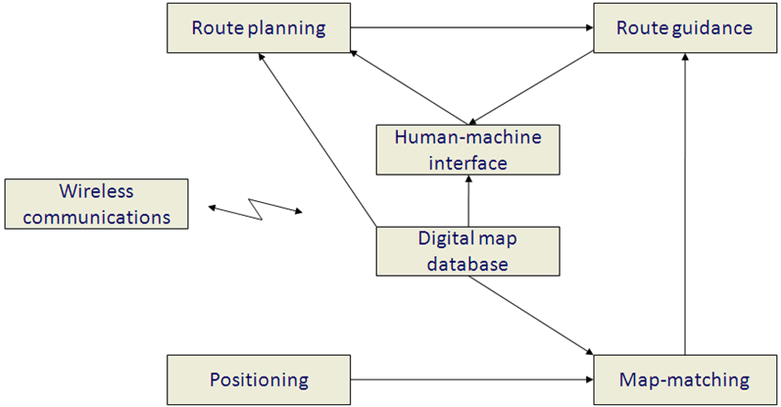
A navigation system may include:
- 1Sensors (devices that measure physical quantities)
- 2Receivers (to receive signals)
- 3Processors (to calculate position)
- 4Display or control system
There are two main types of navigation systems:
- 1Self-contained navigation systems
- 2External signal-based navigation systems
What Is GNSS?
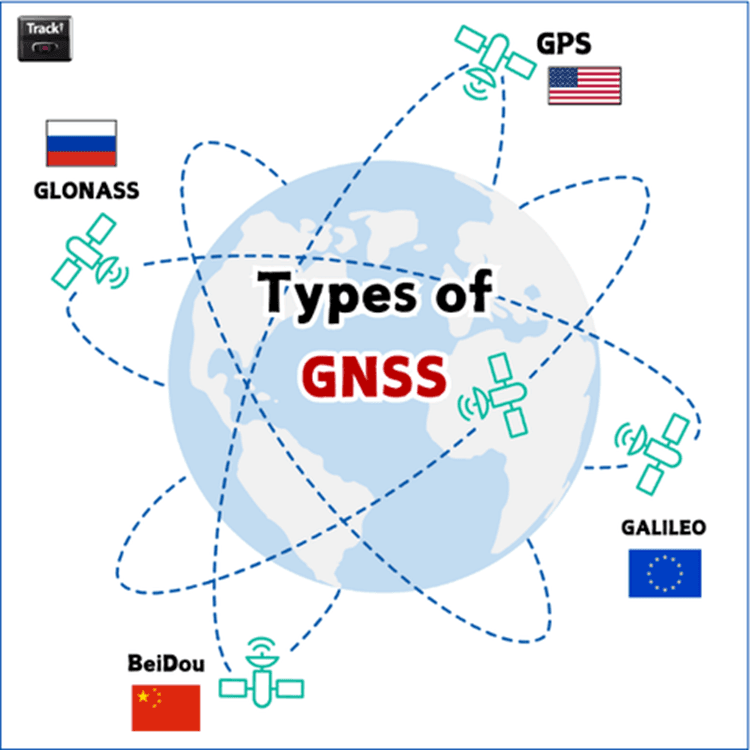
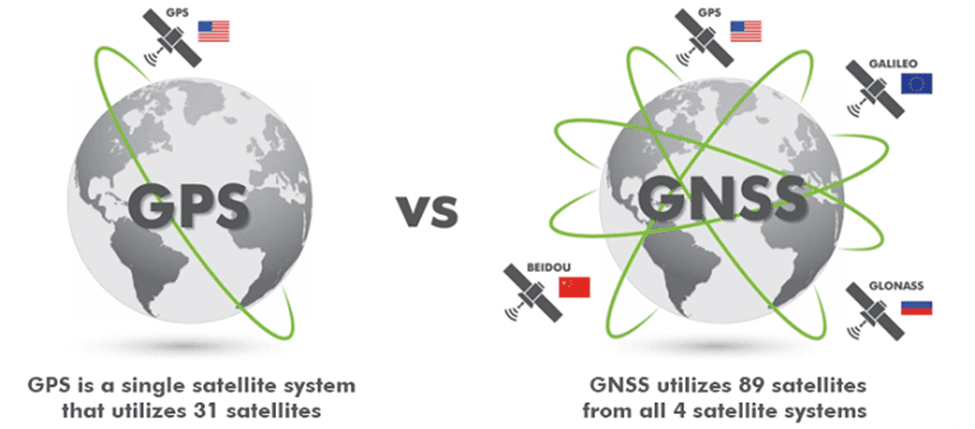
GNSS stands for Global Navigation Satellite System. It is a general term used to describe all satellite-based navigation systems in the world. GNSS is not one system — it is a group of systems.
Major GNSS systems include:
- 1Global Positioning System / GPS (USA)
- 2GLONASS (Russia)
- 3Galileo (European Union)
- 4BeiDou (China)
GPS is part of GNSS, but GNSS includes more than GPS. If your smartphone says 'GPS,' it usually means it is using multiple GNSS systems together.
What Is GPS?
GPS (Global Positioning System) is a satellite navigation system developed by the United States Department of Defense. It became fully operational in 1995.
GPS consists of three segments:
- 1Space Segment (satellites)
- 2Control Segment (ground stations)
- 3User Segment (receivers like your phone)
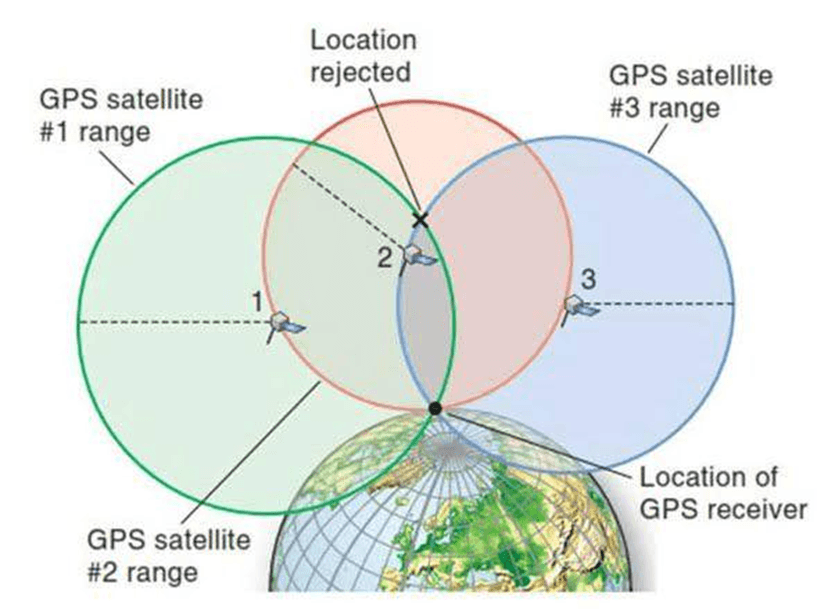
GPS uses at least 24 satellites orbiting Earth. These satellites send signals containing satellite position and precise time (using atomic clocks). Your GPS receiver calculates your position using a method called trilateration.
Principle of GNSS and GPS (How It Works)
The basic principle is based on distance measurement, speed of light, and time synchronization. Each satellite sends a signal with a timestamp. Your receiver calculates the time delay between sending and receiving.
Distance = Speed of Light × Time Delay
By measuring distance from at least 4 satellites, your receiver calculates:
- 1Latitude
- 2Longitude
- 3Altitude
- 4Time
This process is called trilateration.
History of Navigation Systems
Navigation has evolved through history across three major eras:
1. Ancient Navigation
- 1Stars and Sun used for direction
- 2Magnetic compass — works using Earth's magnetic field
2. Radio Navigation (20th Century)
- 1LORAN (Long Range Navigation) — ground-based radio system
3. Satellite Navigation (Modern Era)
- 1GPS (USA)
- 2GLONASS (Russia)
- 3Galileo (EU)
- 4BeiDou (China)
Satellite navigation changed aviation, military, agriculture, and smartphones forever.
Classification of Navigation Systems
1. Based on Operation
A. Terrestrial Navigation
- 1Uses ground-based systems
- 2Example: radio beacons
B. Celestial Navigation
- 1Uses stars and celestial bodies for direction
C. Satellite Navigation (GNSS)
- 1Uses satellites orbiting Earth
- 2Most accurate modern method
2. Based on System Type
A. Inertial Navigation System (INS)
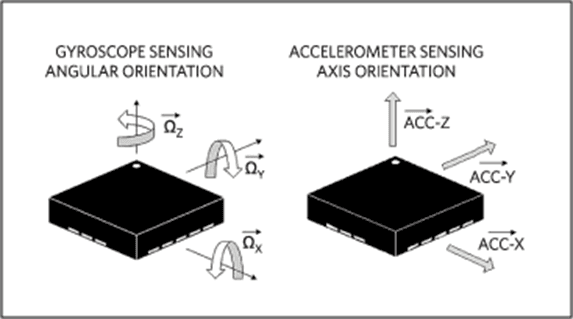
An INS uses internal sensors and does not require external signals. It includes:
- 1IMU (Inertial Measurement Unit) — contains accelerometers and gyroscopes
- 2Accelerometer — measures linear acceleration (change in speed)
- 3Gyroscope — measures angular rotation
INS does not require external signals, but it accumulates error over time without correction.
B. Magnetic Navigation
Uses a magnetometer — a device that measures magnetic field strength. It acts like a digital compass and detects Earth's magnetic field direction. Used in smartphones and drones.
C. Hybrid Navigation System
Modern systems combine multiple technologies for improved accuracy:
- 1GNSS (satellite positioning)
- 2IMU (inertial sensing)
- 3Magnetometer (heading detection)
- 4Barometer (measures air pressure to estimate altitude)
Types of GNSS Receivers
- 1Single-frequency receivers
- 2Dual-frequency receivers (more accurate)
- 3Real-Time Kinematic (RTK) receivers — centimeter-level accuracy
- 4Differential GNSS (DGNSS)
GNSS Augmentation Systems
Satellite signals can be affected by atmospheric delay, signal blockage, and multipath error (signal reflection). To improve accuracy, augmentation systems are used.
- 1WAAS — Wide Area Augmentation System (USA)
- 2EGNOS — European Geostationary Navigation Overlay Service (Europe)
These systems correct GNSS errors and improve positioning accuracy to 1–2 meters.
Applications of GNSS and GPS
Navigation systems are used across nearly every modern industry:
- 1Aviation (autopilot and approach guidance)
- 2Maritime transport (ship tracking)
- 3Drones — FPV and defense drones
- 4Autonomous vehicles (self-driving cars)
- 5Agriculture (precision farming)
- 6Military targeting
- 7Disaster management
- 8Surveying and mapping
- 9Telecom timing synchronization
In Pakistan, GNSS is widely used in ride-hailing services, logistics tracking, agriculture modernization, and drone-based surveillance.
GNSS vs GPS (Comparison)
GPS is a subset of GNSS. GNSS is the umbrella term for all global satellite navigation systems.
Related Technologies
1. IMU (Inertial Measurement Unit)
Used in drones, aircraft, and missiles for self-contained motion tracking without external signals.
2. Magnetometer
Used for heading detection — acts as a digital compass by sensing Earth's magnetic field.
3. LiDAR
Laser-based distance measurement system used in autonomous vehicles and mapping.
4. Dead Reckoning
Position estimation using speed and direction from a known starting point — used as a backup when GNSS is unavailable.
5. Sensor Fusion
Combining GNSS + IMU + magnetometer to improve overall accuracy and reliability.
International Regulations
Satellite navigation systems are regulated under:
- 1ITU — International Telecommunication Union
- 2ICAO — International Civil Aviation Organization
Each GNSS system is operated by its respective country but must follow international radio frequency regulations.
Alternatives to GNSS
In case GNSS fails or is jammed, these alternatives are used:
- 1Inertial Navigation Systems (INS)
- 2Terrestrial radio navigation
- 3Visual navigation (camera-based SLAM)
- 4Celestial navigation
- 5eLORAN (enhanced LORAN)
Modern defense systems use hybrid navigation to avoid signal jamming and GPS denial environments.
Conclusion
A navigation system is the technology that determines position, velocity, and time. GNSS is the global group of satellite navigation systems. GPS is one specific system under GNSS developed by the United States.
Modern navigation systems combine satellite signals with internal sensors like IMU and magnetometer for high accuracy. From smartphones to drones, aircraft to defense systems, navigation technology is shaping the modern world.
Key Takeaways
- 1🛰️ GNSS is the umbrella term — GPS, GLONASS, Galileo, BeiDou are all part of it
- 2📡 GPS is the US-operated system under GNSS
- 3📐 Trilateration from 4+ satellites gives position, altitude, and time
- 4🔧 Hybrid systems (GNSS + IMU + magnetometer) give the highest accuracy
- 5🚀 Navigation technology powers drones, autonomous vehicles, aviation, and defense