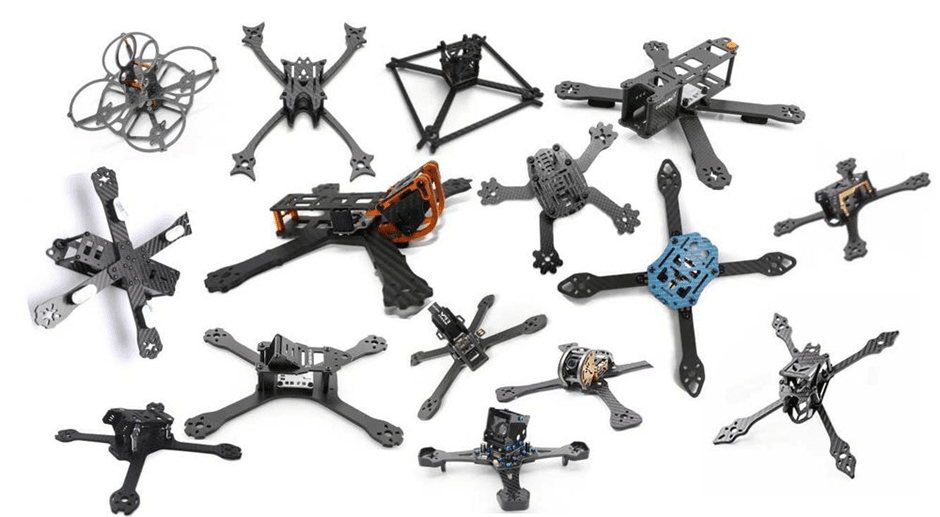
How to Choose the Right Frame for a Drone (Beginner to Pro Guide)
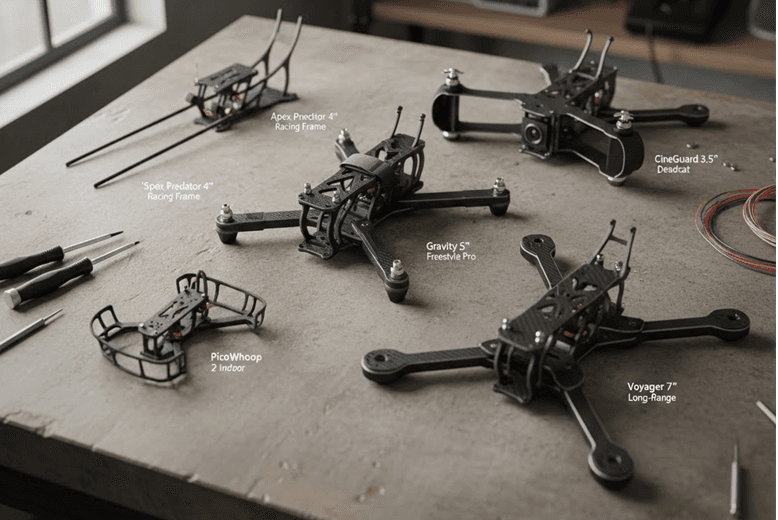
Choosing the right drone frame is one of the most important decisions when building a drone. The frame directly affects flight stability, durability, payload capacity, efficiency, and upgrade options. A wrong frame can cause vibrations, poor control, or even crashes—no matter how good your motors or flight controller are.
The drone frame isn't just a piece of plastic or carbon fiber; it's the foundation of your entire drone build. It determines what components you can use and how your drone will perform.
What the Frame Determines
- 1What size motors and props you can use
- 2How your electronics are protected
- 3Whether your drone is agile for racing or stable for filming
- 4How well it survives crashes
This guide will help you choose the perfect drone frame based on your purpose, drone type, size, material, and budget.
1. Why Drone Frame Selection Matters
The drone frame is the skeleton of your drone. It serves as the structure that holds all critical components together:
- 1Motors
- 2Flight controller
- 3ESCs
- 4Battery
- 5Camera & payload
Benefits of a Well-Chosen Frame
- 1Better flight stability and control
- 2Reduced vibrations and noise
- 3Higher crash resistance and durability
- 4Easy maintenance and future upgrades
2. Choose Frame According to Drone Type
Different drones need different frames optimized for their specific purpose. First, decide what type of drone you are building.
A. Racing Drone Frame
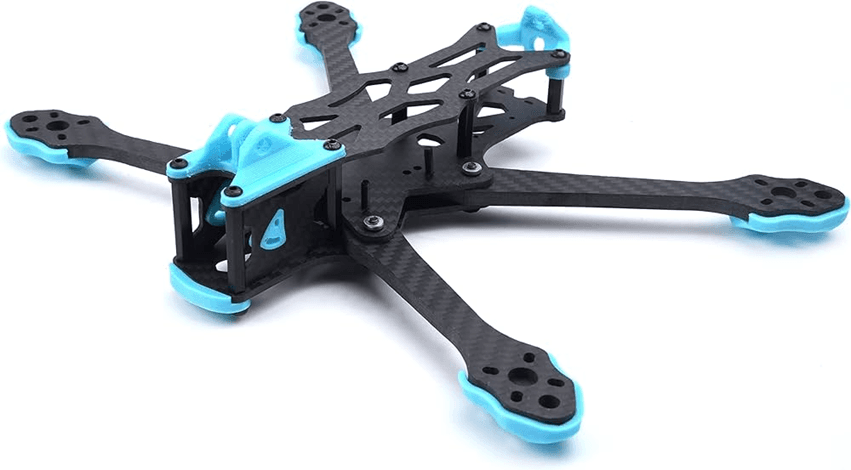
Best for: Speed & agility
- 1Frame size: 3" – 5"
- 2Material: Carbon Fiber
- 3Lightweight design
- 4Compact construction
- 5Strong arms for high-speed maneuvers
- 6Supports high-KV motors
5-inch FPV Racing Frame (210mm / 220mm diagonal)
B. Camera / Photography Drone Frame
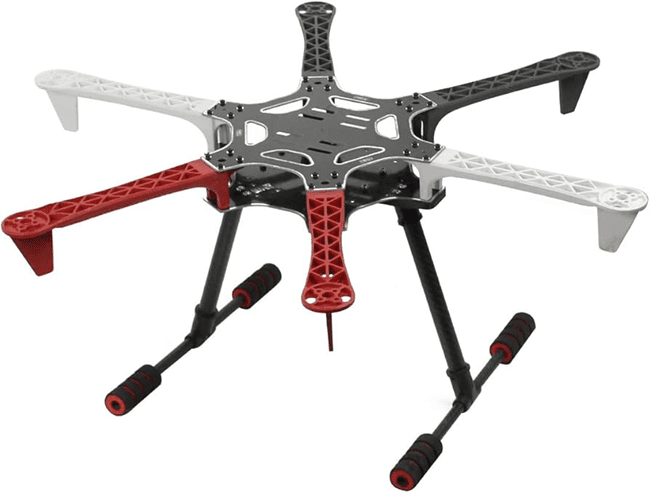
Best for: Stability & smooth video recording
- 1Frame size: 7" – 10"
- 2Material: Carbon fiber or aluminum
- 3Wide body for stability
- 4Integrated landing gear
- 5Gimbal mount support
- 6Advanced vibration damping
F550 Hexacopter Frame - Professional cinema platform
C. Long-Range / Payload Drone Frame
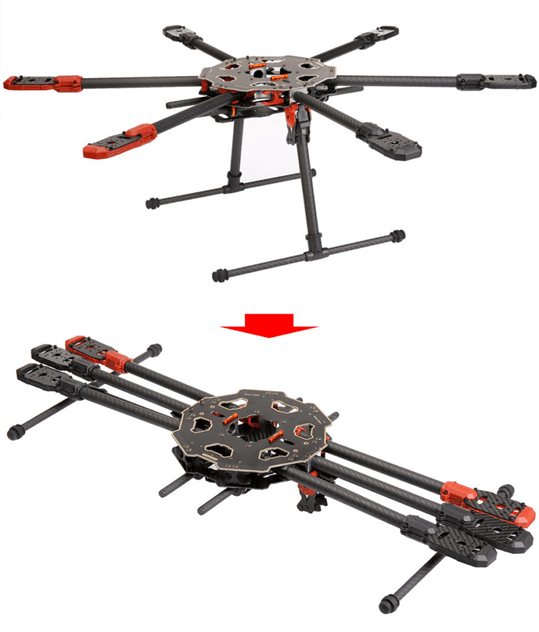
Best for: Delivery, mapping, and extended long flights
- 1Frame size: 7" – 13"+
- 2Material: Carbon fiber
- 3Foldable arms for transport
- 4Large battery support
- 5High payload capacity
- 6Extended flight time optimization
Tarot 680 Pro Frame - Industrial-grade payload carrier
3. Drone Frame Size Explained (Very Important)
Frame size is measured in motor-to-motor diagonal distance (mm). This measurement is critical for compatibility with propellers and components.
Always match **frame size with propeller size**. Using the wrong propeller size causes vibrations, poor handling, and component damage.
4. Arm Design (IMPORTANT SECTION)
Drone arm design is one of the most overlooked but critical parts of frame selection. The arm structure directly impacts vibration, durability, and flight characteristics.
4.1 Arm Thickness
- 1✔ Thicker arms = less vibration and better durability
- 2❌ Too thick = extra weight and reduced flight time
4.2 Arm Width & Shape
Wide Arms
- 1✔ Strong structure
- 2✔ Good for payload carrying
- 3❌ More air resistance
- 4❌ Slightly heavier
Slim Arms
- 1✔ Aerodynamic design
- 2✔ Faster response times
- 3❌ Less crash resistance
- 4❌ More vibration prone
Racing drones prefer **slim arms** for agility. Payload drones prefer **wide arms** for strength and stability.
4.3 Arm Length
Short Arms
- 1Faster roll & yaw response
- 2Better racing performance
- 3Reduced moment arm for oscillations
Long Arms
- 1Supports larger propellers
- 2Better efficiency for extended flight
- 3Improved stability with payload
4.4 Arm Mounting Style
Separate / Replaceable Arms
- 1✔ Easy to repair after crashes
- 2✔ Low maintenance cost
- 3✔ Popular in FPV racing frames
- 4✔ Quick module replacement
One-Piece (Unibody) Arms
- 1✔ Very strong integrated structure
- 2❌ Entire frame breaks in major crash
- 3❌ Expensive to replace
Replaceable arms are **best for beginners**. They reduce repair costs and make maintenance easier.
4.5 Arm Angle & Motor Position
- 1Straight arms → Predictable control response
- 2Slightly angled arms → Better airflow and reduced prop wash
- 3Motor distance must avoid prop wash overlap between adjacent props
4.6 Arm Vibration Control
Good Arm Design
- 1Reduces motor vibration transmission
- 2Improves gyroscope accuracy
- 3Helps achieve stable video recording
- 4Reduces motor heating
Bad Arm Design
- 1Causes PID oscillations and instability
- 2Results in camera jello and video artifacts
- 3Leads to excessive ESC heating
- 4Reduces flight efficiency
5. Frame Material: Which One is Best?
A. Carbon Fiber (Best Choice)
- 1✔ Very strong and rigid structure
- 2✔ Lightweight for excellent power-to-weight ratio
- 3✔ Low vibration transmission
- 4❌ More expensive than alternatives
Carbon Fiber is worth the investment for serious drone builders. **Recommended for FPV racing, freestyle, and professional drones.**
B. Aluminum
- 1✔ Cheap and affordable
- 2✔ Easy to modify and customize
- 3❌ Heavy material increases weight
- 4❌ More vibration and noise
**DIY custom builds and beginner learning drones** where cost is primary concern.
C. Plastic / Nylon
- 1✔ Very cheap and affordable
- 2✔ Lightweight construction
- 3❌ Weak and fragile structure
- 4❌ Breaks easily on crashes
**Learning, practice, and indoor-only drones.** Not suitable for outdoor or high-performance applications.
6. Frame Weight vs Strength Balance
Effects of Heavy Frame
- 1Reduces overall flight time significantly
- 2Requires larger, more powerful motors
- 3Higher energy consumption
- 4Less responsive handling
Effects of Weak Frame
- 1Breaks easily on impact
- 2Causes vibrations and oscillations
- 3Reduces video quality
- 4Shortens component lifespan
**Lightweight carbon fiber with strong arms (4–5mm thick)** provides the optimal balance of weight and strength.
7. Compatibility with Components
Before buying a frame, always verify compatibility with your intended components:
- 1Flight controller mounting holes (20×20 / 30.5×30.5 standards)
- 2ESC size and placement options
- 3Motor mounting holes and compatibility
- 4Battery size and mounting location
- 5Camera size (FPV or gimbal mounted)
**Many beginners ignore compatibility and regret their purchase later.** Always verify before buying.
8. Ease of Repair & Upgrade
Choose a frame that prioritizes repairability and modularity:
- 1Replaceable arms for quick repairs
- 2Standard screw sizes for easy modification
- 3Clear wire routing paths
- 4Modular component attachment points
**Frames with replaceable components save significant money after crashes** and crashes are inevitable for FPV pilots.
9. Budget Consideration
**Do not buy the cheapest frame for racing or payload drones.** Invest in quality to avoid frequent repairs and replacements.
10. Common Mistakes Beginners Make
- 1Buying wrong size frame that doesn't fit components
- 2Ignoring payload weight capacity
- 3Using plastic frame for high-power motors
- 4Not implementing vibration isolation
- 5Poor airflow design causing motor overheating
11. Choosing by Drone Purpose: Quick Decision Matrix
12. Final Recommendation
For Beginners
If you are a beginner, start with these specifications:
- 15-inch carbon fiber frame
- 2210–250mm size (motor-to-motor diagonal)
- 3Good airflow design
- 4Standard mounting holes for universal compatibility
For Professional Builders
If you are professional, select based on specific requirements:
- 1Payload capacity and weight limits
- 2Flight time requirements
- 3Camera specifications (weight, gimbal type)
- 4Environmental conditions (indoor/outdoor)
Conclusion
Choosing the right drone frame is not about looks or brand prestige; it's about performance, stability, and safety. Your frame choice impacts every aspect of your drone's operation and longevity.
Always select a frame that matches your drone purpose, size, components, and future upgrades. A good frame is the foundation of a reliable, performant drone.
Benefits of Choosing Right
- 1🚀 Fly smoother with less vibration
- 2🔧 Break less due to better durability
- 3📷 Record better video with stable platform
- 4⚡ Better power efficiency
- 5🛠️ Easier maintenance and repairs